Kitchen Cabinet Layout: The Foundation of a Functional and Well-Planned Kitchen
Why Kitchen Cabinet Layout Matters More Than Style
In kitchen design, visual style often gets the most attention—but it is the kitchen cabinet layout that determines how well the space actually works. A beautifully finished kitchen can still feel frustrating if the cabinet layout does not support daily cooking habits, storage needs, and movement flow.
Cabinet layout planning influences how efficiently you move between tasks, how easily items are accessed, and how comfortable the kitchen feels over time.

What Defines a Good Kitchen Cabinet Layout?
A functional kitchen layout balances three core elements: movement, storage, and usability. Rather than focusing on individual cabinets, layout planning considers the kitchen as a system.
- Workflow efficiency: Minimizing unnecessary steps between key work areas
- Logical storage placement: Storing items close to where they are used
- Clear circulation paths: Allowing smooth movement without congestion
When these elements are aligned, the kitchen feels intuitive rather than forced.
The Kitchen Work Triangle and Modern Layout Thinking
Traditional kitchen design often references the work triangle—connecting the sink, cooktop, and refrigerator. While still relevant, modern kitchens require a more flexible interpretation of this concept.
Today’s cabinet layout planning also accounts for:
- Multiple users cooking at the same time
- Secondary appliances such as ovens or prep sinks
- Open-plan kitchens connected to living spaces
The goal is not strict geometry, but smooth task flow.
Common Kitchen Cabinet Layout Types
Different kitchen shapes call for different cabinet layout strategies. Understanding these base layouts helps determine what will work best in a given space.
- Single-wall layout: All cabinets arranged along one wall, ideal for compact kitchens.
- Galley layout: Parallel cabinet runs that maximize efficiency in narrow spaces.
- L-shaped layout: Uses two adjacent walls, offering flexibility and open circulation.
- U-shaped layout: Provides generous storage and counter space, ideal for larger kitchens.
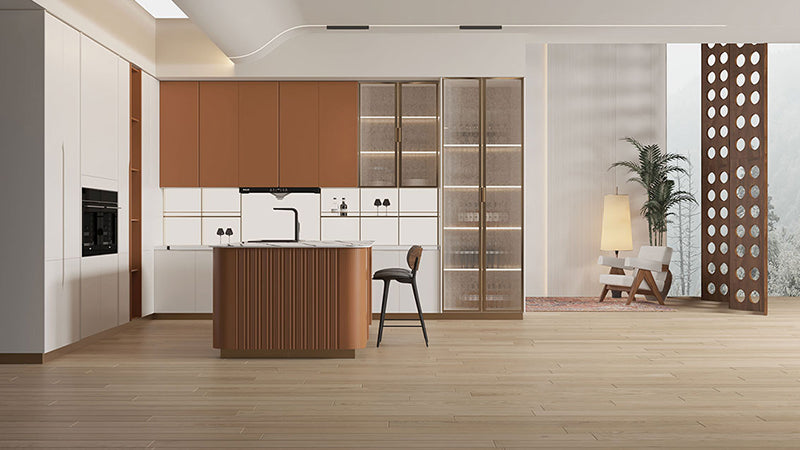
- Island layout: Adds functionality and social interaction, often used in open kitchens.
Each layout has strengths and limitations that should be matched to room size and lifestyle.
Cabinet Layout Planning Based on Daily Use
Effective kitchen layout design starts with understanding how the kitchen is actually used. A layout that works well for one household may be inefficient for another.
Key questions to consider:
- How often do you cook, and what type of meals?
- Do multiple people use the kitchen at the same time?
- How much storage is needed for cookware, appliances, and pantry items?
Answering these questions helps determine cabinet placement, drawer depth, and storage zoning.
Storage Zones and Cabinet Placement
A well-planned cabinet layout groups storage into logical zones:
- Prep zone: Drawers and cabinets near cutting and preparation surfaces
- Cooking zone: Storage for pots, pans, and utensils close to the cooktop
- Cleaning zone: Sink-related storage for cleaning supplies and dishware
- Pantry zone: Dedicated cabinets for dry goods and bulk storage
Zoning reduces unnecessary movement and improves overall kitchen efficiency.
Common Kitchen Cabinet Layout Mistakes
Many layout issues stem from prioritizing appearance over function.
- Placing appliances without considering door clearance
- Overloading corners with hard-to-access storage
- Ignoring traffic flow in open kitchens
Avoiding these mistakes requires planning the layout before selecting finishes or door styles.

Custom Cabinet Layouts and Design Coordination
Custom or semi-custom cabinetry allows layout adjustments that standard modules cannot accommodate. This flexibility is especially valuable in irregular spaces or open-plan kitchens.
Some manufacturers, such as Goldenhome, approach cabinet layout as part of a broader kitchen system—where cabinet sizes, storage functions, and circulation paths are coordinated early in the design phase. The benefit lies in usability rather than visual complexity.
Conclusion: Layout as the Backbone of Kitchen Design
A successful kitchen cabinet layout prioritizes how the kitchen functions day to day. When layout planning is done thoughtfully, cabinets support workflow, reduce clutter, and adapt to real-life use.
Before choosing colors, finishes, or decorative details, investing time in layout planning ensures the kitchen works beautifully—long after the design trends fade.