Kitchen Cabinet Designs for Small Kitchens That Feel Open and Functional
Why Small Kitchens Require a Different Design Approach
Designing cabinets for a small kitchen is not simply about reducing size. Small kitchen cabinet designs must work harder to support storage, movement, and visual comfort within limited space. Poor design decisions become noticeable much faster in compact kitchens.
Successful kitchen cabinet designs for small spaces focus on efficiency, proportion, and thoughtful use of vertical and hidden storage.

Prioritizing Layout Over Decoration
In small kitchens, layout has a greater impact than decorative details. A visually simple cabinet design paired with a well-planned layout often performs better than ornate cabinetry that overwhelms the space.
Streamlined Cabinet Runs
Straight or L-shaped cabinet runs minimize visual breaks and keep circulation paths clear. Reducing unnecessary cabinet interruptions helps small kitchens feel more open.
Limiting Upper Cabinet Depth
Shallower upper cabinets reduce visual bulk and prevent the kitchen from feeling enclosed, while still providing essential storage.
Using Vertical Space More Effectively
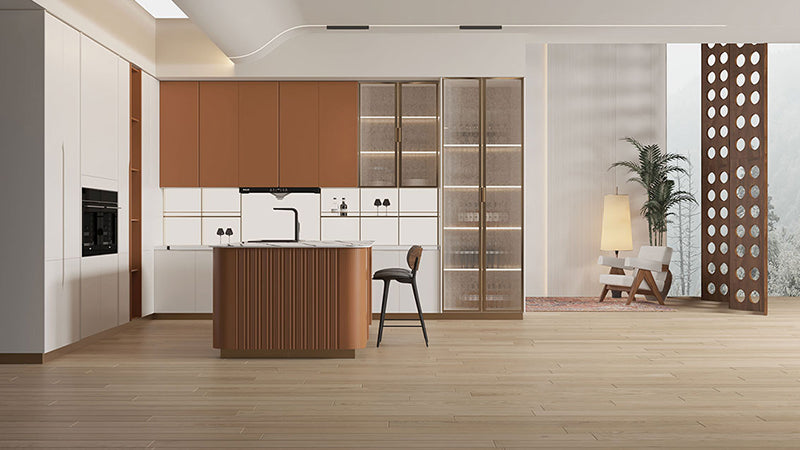
Vertical storage is one of the most valuable assets in small kitchen cabinet designs. Tall cabinets maximize storage without increasing floor footprint.
Full-Height Cabinets
Full-height cabinet designs eliminate wasted space above standard wall cabinets. Upper sections can be used for seasonal or less frequently used items.
Integrated Pantry Cabinets
Slim pantry cabinets combine food storage and cabinetry into a single vertical unit, reducing the need for multiple storage zones.
Choosing the Right Door Styles for Small Kitchens
Door style plays a major role in how spacious a kitchen feels.
Flat-Panel and Shaker Designs
Flat-panel and slim Shaker doors are ideal for small kitchen cabinet designs. Their clean lines reduce visual noise and work well with both modern and transitional interiors.
Handle-Less or Minimal Hardware
Integrated handles or low-profile hardware prevent visual clutter and improve flow in narrow spaces.
Smart Storage Features That Make a Difference
Storage efficiency matters more than total cabinet volume in small kitchens. Well-designed interiors significantly improve usability.
Drawer-Based Base Cabinets
Replacing shelves with drawers increases accessibility and prevents wasted space at the back of cabinets.
Pull-Out and Corner Solutions
Pull-out storage and corner mechanisms ensure that no space is left unused, even in challenging layouts.
Color and Finish Choices That Expand Space
Light-reflective finishes help small kitchens feel brighter and more open.
Light and Neutral Cabinet Colors
White, beige, and light wood tones visually expand space and adapt easily to different styles.
Consistent Finishes Across Cabinets
Using a single cabinet finish reduces visual fragmentation and creates a calmer, more unified look.
Avoiding Common Small Kitchen Cabinet Design Mistakes
Some design choices can unintentionally make small kitchens feel more cramped.
- Overly decorative door profiles
- Too many contrasting colors
- Excessive open shelving
Simplifying cabinet design often leads to better results.

Why Customization Matters in Compact Kitchens
Small kitchens benefit greatly from customized cabinet sizing and internal layouts. Standard cabinet dimensions may not fully utilize available space.
Cabinet systems that allow flexible sizing and interior configuration, such as those developed by goldenhome, help designers and homeowners optimize small kitchens without sacrificing aesthetics.
Designing Small Kitchens for Long-Term Comfort
The best small kitchen cabinet designs focus on daily usability rather than short-term trends. Efficient layouts, adaptable storage, and visually calm finishes ensure the kitchen remains comfortable over time.
With thoughtful planning, even compact kitchens can feel spacious, organized, and enjoyable to use.