Modern Kitchen Units and Global Design Trends: Creating Timeless Contemporary Kitchens
Design trends evolve, but truly successful kitchens feel relevant for years rather than seasons. Modern kitchen units have become the foundation of contemporary kitchens worldwide because they balance aesthetic clarity with functional intelligence. From Europe to Southeast Asia and North America, modern kitchen units reflect a shared design language that prioritizes simplicity, adaptability, and visual harmony.
This article explores the global design trends influencing modern kitchen units today and explains how homeowners can create kitchens that feel current yet timeless.

The Global Appeal of Modern Kitchen Units
Despite cultural differences, modern kitchens across regions share several core design principles:
- Minimal visual clutter
- Neutral color palettes with subtle contrasts
- Integrated appliances and storage
- Balanced proportions and cleanTyping lines
These principles allow modern kitchen units to adapt easily to different architectural styles and lifestyles, making them a global standard rather than a regional trend.
Minimalism as a Design Foundation
Minimalism does not mean a lack of character. In modern kitchen design, it means intentional choices and refined details.
- Flat-panel cabinet doors instead of decorative profiles
- Hidden handles or recessed grip systems
- Continuous cabinet surfaces without visual breaks
- Clean transitions between materials
Minimalist kitchen cabinets help spaces feel larger, calmer, and more organized—especially important in open-plan homes.
Color Trends in Contemporary Kitchen Units
Modern kitchen units rely on color to define mood rather than ornamentation. Current global preferences favor:
- Soft whites and warm neutrals for timeless elegance
- Grey and taupe tones for understated sophistication
- Natural wood textures to add warmth and balance
- Dark accent units for depth and contrast
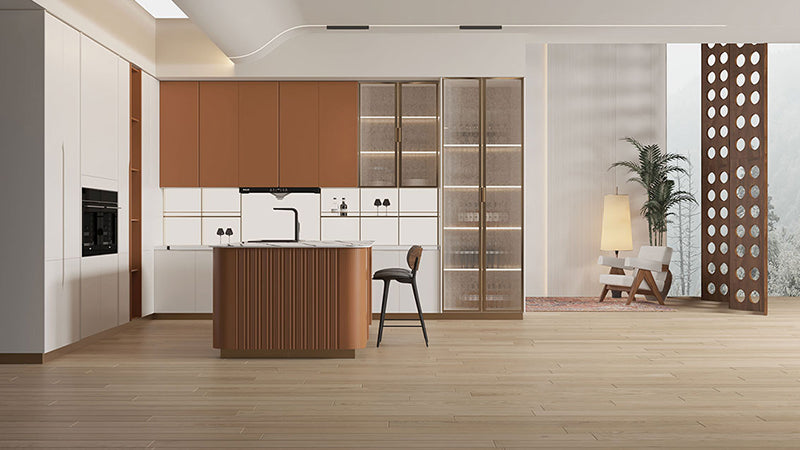
Two-tone kitchen units remain popular, particularly in island-based layouts where visual layering enhances the overall design.

Material Combinations That Define Modern Kitchens
Modern kitchen units often combine multiple materials to create depth while maintaining a cohesive look.
- Lacquered cabinet fronts paired with wood veneer
- Matte finishes combined with stone or quartz countertops
- Glass display units integrated into solid cabinet walls
- Metal accents for subtle industrial influence
GoldenHome offers extensive material combinations that align with international design trends while meeting local market preferences.
Handleless Design and Visual Continuity
Handleless kitchen units are a defining feature of contemporary kitchens. They create a smooth, uninterrupted surface that enhances visual continuity.
- Gola profile systems
- Integrated finger-pull channels
- Push-to-open mechanisms
These solutions not only improve aesthetics but also contribute to easier cleaning and maintenance.
Open-Plan Living and Kitchen Integration
Modern homes increasingly favor open layouts where kitchens blend into living and dining areas. Modern kitchen units support this transition through:
- Consistent materials across cabinetry and furniture
- Low-profile units that reduce visual dominance
- Island units that function as social connectors
- Hidden storage that maintains a living-room atmosphere
This integration is particularly valued in urban apartments and contemporary family homes.
Regional Design Influences on Modern Kitchen Units
European Design
Focuses on minimalism, handleless systems, and high-quality finishes with restrained color palettes.
North American Design
Combines modern units with functional layouts, larger islands, and family-oriented storage solutions.
Asian Market Preferences
Emphasizes space efficiency, durability, and light-colored cabinets to maximize brightness.
GoldenHome adapts modern kitchen units to suit these regional preferences while maintaining a consistent brand aesthetic.
Timeless Design vs. Short-Lived Trends
To avoid design fatigue, modern kitchen units should be planned with longevity in mind.
- Choose neutral base colors
- Use trends as accents, not foundations
- Prioritize quality materials and construction
- Design flexible storage systems
This approach ensures that kitchens remain relevant even as trends evolve.
GoldenHome’s Design Philosophy for Modern Kitchens
GoldenHome approaches modern kitchen units as long-term investments rather than temporary fashion statements.
- Designs based on global trend analysis
- Material selection focused on durability and aesthetics
- Customization to suit architectural and cultural needs
- Consistent quality across international projects
This philosophy allows GoldenHome kitchens to feel contemporary today and timeless tomorrow.
Conclusion
Modern kitchen units succeed because they align with global design values—simplicity, functionality, and visual harmony. By understanding current trends and focusing on timeless principles, homeowners can create contemporary kitchens that remain stylish and practical for years.
With its design-driven approach and international expertise, GoldenHome delivers modern kitchen units that meet the aesthetic and functional expectations of global markets.