Kitchen Cabinet Designs: How to Choose the Right Style, Layout, and Structure
Why Kitchen Cabinet Design Matters More Than Ever
Kitchen cabinet designs play a defining role in how a kitchen looks, functions, and ages over time. Cabinets occupy the largest visual area in the kitchen and directly influence storage efficiency, workflow, and overall comfort.
For homeowners, cabinet design determines daily usability. For designers, builders, and dealers, it shapes project value, customer satisfaction, and long-term performance.

Core Elements of Successful Kitchen Cabinet Designs
Effective kitchen cabinet design balances appearance and function. While visual style attracts attention, structure and layout determine how well the kitchen performs in everyday use.
Layout and Space Planning
The cabinet layout sets the foundation for the entire kitchen. Poor layout choices can limit movement and reduce usable storage, regardless of how attractive the cabinets appear.
- Efficient work triangle between sink, stove, and refrigerator
- Clear circulation paths around islands and walkways
- Logical grouping of storage zones
Storage Structure and Accessibility
Modern kitchen cabinet designs prioritize accessibility. Drawers, pull-out systems, and adjustable shelving are increasingly favored over static storage.
Well-structured interiors reduce clutter and improve long-term organization.
Popular Kitchen Cabinet Design Styles
Different cabinet styles appeal to different lifestyles and markets. Understanding the most common design categories helps narrow down suitable options.
Modern Kitchen Cabinet Design
Modern cabinet designs emphasize clean lines, minimal ornamentation, and smooth surfaces. Flat-panel doors, handle-less profiles, and neutral colors are common features.
Transitional Cabinet Designs
Transitional kitchens blend modern simplicity with subtle traditional elements. Shaker-style doors with refined proportions are widely used in this category.
Classic and Traditional Designs
Traditional cabinet designs focus on decorative details, raised panels, and richer finishes. These designs often prioritize warmth and timeless appeal.
Material Choices in Kitchen Cabinet Design
Material selection affects both appearance and durability. Solid wood, engineered panels, and composite materials each serve different design and budget goals.
Custom kitchen cabinet designs often combine materials strategically to balance performance and cost.
Color and Finish Trends
Color plays a major role in cabinet design. Light tones enhance openness, while darker finishes create contrast and depth.
Neutral and Natural Finishes
Neutral colors remain popular due to their adaptability and long-term appeal. Natural wood tones add warmth without overwhelming the space.
Two-Tone Cabinet Designs
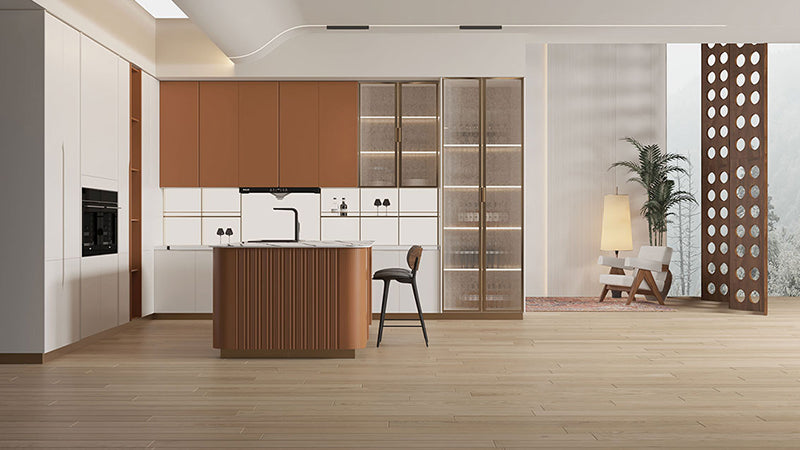
Two-tone designs use contrasting colors between upper and lower cabinets or islands to create visual interest while maintaining balance.
Customization and Design Flexibility
Custom kitchen cabinet designs allow for precise sizing, tailored storage, and personalized finishes. This flexibility is especially valuable in kitchens with unique layouts or specific storage needs.
Customization improves both usability and visual harmony.

Designing for Long-Term Use
Trends change, but kitchens are used daily for many years. Successful cabinet designs prioritize durability, adaptability, and timeless aesthetics.
Cabinets that can be reconfigured or refinished over time extend the life of the kitchen.
Professional Design and Manufacturing Support
Well-executed kitchen cabinet designs require coordination between design intent and manufacturing capability. Integrated cabinet systems help ensure consistency in quality and finish.
Manufacturers such as Goldenhome support modern kitchen projects by aligning design flexibility with large-scale production standards, helping designers and dealers deliver reliable results.
Building a Kitchen That Works and Lasts
Kitchen cabinet designs are more than a style decision. They influence daily routines, storage efficiency, and long-term satisfaction.
By focusing on layout, structure, materials, and adaptability, kitchens can achieve a balance between beauty and performance that lasts for years.