Modern Kitchen: Design Principles That Define a Truly Contemporary Space
What Does “Modern Kitchen” Really Mean?
The term modern kitchen is widely used, yet often misunderstood. Many kitchens labeled as “modern” rely only on glossy finishes or neutral colors, without addressing the deeper principles that define modern design.
A truly modern kitchen is not defined by decoration, but by clarity—of layout, function, and form. It prioritizes efficiency, visual simplicity, and adaptability to contemporary lifestyles.

The Core Principles of Modern Kitchen Design
Modern kitchen design follows a set of guiding principles that go beyond trends.
- Function-first planning: Layout supports daily use before visual styling.
- Clean geometry: Straight lines, clear edges, and minimal ornamentation.
- Visual calm: Reduced clutter through integrated storage and hidden elements.
- Material honesty: Finishes are chosen for performance as much as appearance.
These principles create kitchens that feel intentional rather than decorative.
Modern Kitchen Layouts: Simplicity with Purpose
In a modern kitchen, layout plays a critical role in defining the space.
Common layout characteristics include:
- Clear circulation paths
- Minimal interruptions between work zones
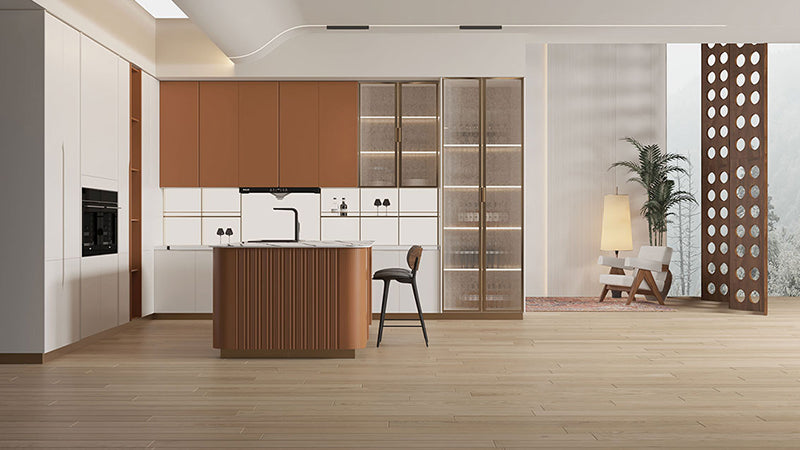
- Island-centered planning in open layouts
Rather than maximizing cabinet count, modern layouts focus on usability and flow.
Minimalist Cabinetry and Integrated Storage
One of the defining features of a modern kitchen design is streamlined cabinetry.
- Flat-panel or slab doors
- Handleless or recessed pull systems
- Full-height cabinets for visual continuity
Integrated appliances and concealed storage help maintain a clean, uninterrupted visual surface.
Material Choices in Modern Kitchens
Materials in modern kitchens are selected for both durability and visual restraint.
- Matte finishes: Reduce glare and enhance softness.
- Natural textures: Wood, stone, or concrete-inspired surfaces add warmth.
- Metal accents: Used sparingly for contrast and precision.
The goal is balance—avoiding both sterility and excess.
Lighting as a Design Element
Lighting in modern kitchens is integrated rather than decorative.
- Linear LED lighting for task clarity
- Under-cabinet lighting to enhance surfaces
- Indirect lighting to create depth and calm
Good lighting reinforces both function and atmosphere.
Modern Kitchens and Open Living
Many modern kitchens are part of open-plan living spaces.
This requires cabinetry and finishes to transition smoothly into surrounding areas. Consistent materials and restrained color palettes help the kitchen feel like an extension of the living space rather than a separate zone.

Customization Within Modern Design
While modern kitchens favor simplicity, they are rarely generic.
Custom or semi-custom cabinetry allows layouts, storage solutions, and proportions to be tailored without compromising the modern aesthetic. Some manufacturers, such as Goldenhome, approach modern kitchen planning as a system—aligning layout, cabinet proportions, and materials early to maintain visual clarity. The emphasis remains on usability and longevity, not visual excess.
Conclusion: Modern Kitchens Are About Intentional Design
A successful modern kitchen is defined by thoughtful planning rather than surface trends. When layout, materials, storage, and lighting work together, the result is a space that feels calm, efficient, and relevant over time.
Rather than asking whether a kitchen looks modern, the better question is whether it functions effortlessly—and still feels right years later.