Modern vs Classic 2 Tone Kitchen Cabinets: Understanding the Style Differences
Why Style Direction Matters in 2 Tone Kitchen Cabinets
While color selection is essential, overall style direction defines how 2 tone kitchen cabinets are perceived over time. The same color pairing can feel sleek and contemporary or warm and traditional depending on cabinet profiles, finishes, and details.
Understanding the difference between modern and classic approaches helps homeowners and designers create kitchens that feel intentional rather than trend-driven.

Modern Two Tone Kitchen Cabinets: Clean and Minimal
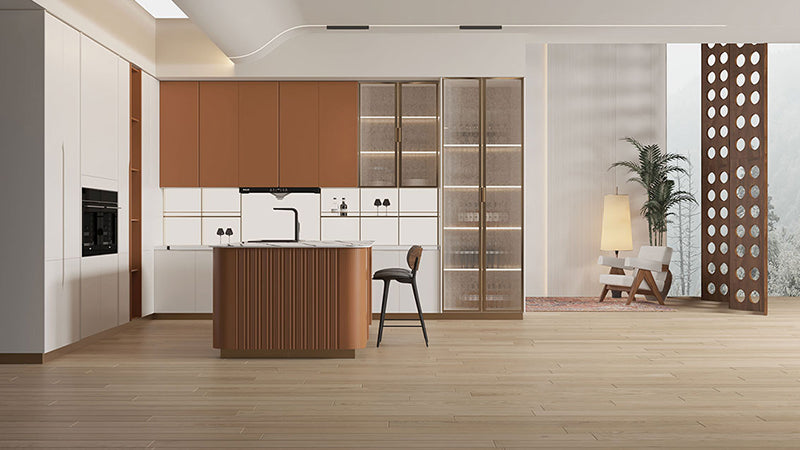
Modern two tone kitchen cabinets focus on simplicity, clean lines, and subtle contrast. The goal is to create visual interest without decorative complexity.
Key Characteristics of Modern Two Tone Cabinets
- Flat-panel or slab cabinet doors
- Handle-less or slim-profile hardware
- Matte or satin finishes
- Neutral or muted color palettes
In modern kitchens, two-tone designs often separate functions rather than decorate surfaces.
Popular Modern Color Combinations
- White and charcoal gray
- Black and natural wood
- Soft gray and muted green
These combinations emphasize contrast while maintaining a calm, architectural feel.
Classic Two Tone Kitchen Cabinets: Warm and Timeless
Classic two tone kitchen cabinets emphasize balance, proportion, and subtle elegance. Rather than strong contrast, classic styles focus on harmony and depth.
Key Characteristics of Classic Two Tone Cabinets
- Shaker or raised-panel doors
- Traditional hardware with visible detailing
- Softer finishes and warmer tones
- Balanced color contrast
Classic kitchens often use two-tone designs to add richness without overwhelming the space.
Popular Classic Color Combinations
- Cream and warm gray
- White and navy blue
- Beige and soft wood tones
These pairings feel familiar and age gracefully, making them popular in long-term homes.
How Cabinet Profiles Influence Two Tone Style
Cabinet door style plays a major role in how two tone cabinet styles are perceived. Flat doors immediately signal modern design, while framed or detailed doors lean classic.
Even with identical colors, changing the door profile can completely shift the kitchen’s character.
Hardware Choices in Modern vs Classic Designs
Hardware acts as a visual accent in two-tone kitchens.
Modern Hardware
- Integrated or hidden pulls
- Minimalist metal finishes
- Linear forms
Classic Hardware
- Knobs and pulls with detailing
- Warm metallic finishes
- Traditional shapes
Choosing hardware that matches the intended style ensures consistency throughout the kitchen.
Mixing Modern and Classic Two Tone Elements
Some kitchens blend both styles successfully. For example, modern cabinet shapes paired with classic color combinations can create a transitional look.
The key is to let one style dominate while the other plays a supporting role.

Which Style Is Right for Your Kitchen?
Choosing between modern and classic 2 tone kitchen cabinets depends on lifestyle, architecture, and personal preference.
- Modern styles suit open-plan, minimalist homes
- Classic styles complement traditional or transitional interiors
- Transitional designs balance both worlds
Conclusion: Style Defines Longevity
2 tone kitchen cabinets work across a wide range of styles, but longevity depends on clear stylistic intent. Modern designs offer sleek simplicity, while classic styles provide warmth and familiarity.
By aligning color, cabinet profiles, and hardware with a consistent design direction, two-tone kitchens remain attractive and functional for years to come.