Chinese Kitchen Design Trends: Evolving From Tradition to Contemporary Living
The Evolution of Chinese Kitchen Design
Chinese kitchen design has undergone a significant transformation over the past decade. Traditionally defined by enclosed layouts and heavy wood cabinetry, it has gradually evolved into a more open, flexible, and visually refined space. This evolution reflects changing lifestyles, smaller urban homes, and the influence of global design trends.
Today, chinese kitchen design represents a seamless integration of cultural heritage and contemporary living. Rather than abandoning tradition, modern interpretations reinterpret classic elements through simplified forms, advanced materials, and innovative layouts.

From Closed Kitchens to Open Concepts
One of the most notable trends in modern chinese kitchen design is the shift from fully enclosed kitchens to open or semi-open layouts. While traditional kitchens prioritized separation to control smoke and heat, modern ventilation systems now allow greater flexibility in spatial planning.
Glass partitions, sliding panels, and minimalist screens are widely used to maintain visual openness while preserving functional separation. This approach aligns well with contemporary chinese kitchen preferences, especially in apartments and townhouses.
Modern Chinese Kitchen Design and Space Efficiency
Space optimization is a defining principle of modern chinese kitchen design. Designers increasingly focus on efficient circulation paths, compact work triangles, and multifunctional storage solutions. These strategies ensure that every square meter contributes to usability.
Vertical storage, tall cabinets, and integrated appliances are common features. This efficient planning not only enhances functionality but also reinforces the clean, orderly appearance associated with contemporary chinese kitchen aesthetics.
Island and Peninsula Layouts
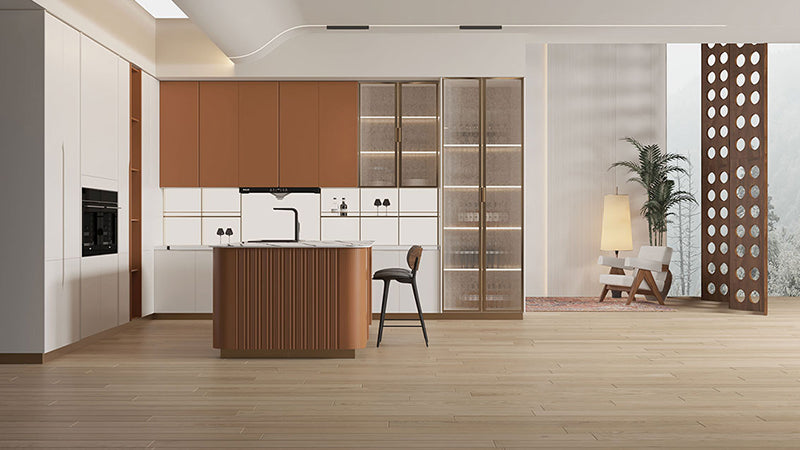
Kitchen islands and peninsulas are gaining popularity in chinese kitchen design, especially in open-plan homes. These elements serve multiple purposes, including food preparation, casual dining, and social interaction.
By combining practicality with visual balance, island layouts contribute to a more dynamic and social kitchen environment without disrupting traditional design harmony.
Material Trends in Contemporary Chinese Kitchens
Material selection plays a crucial role in shaping modern chinese kitchen design. While natural wood remains a core element, designers increasingly pair it with stone, metal, and advanced composite materials to create contrast and durability.
Matte finishes, anti-fingerprint surfaces, and moisture-resistant panels reflect modern living demands while maintaining an elegant and understated appearance.
Blending Natural and Industrial Elements
A growing trend in contemporary chinese kitchen design is the combination of natural textures with subtle industrial accents. Warm wood tones soften the look of metal frames, stone countertops, and minimalist hardware.
This balanced contrast appeals to homeowners seeking asian kitchen design ideas that feel modern yet culturally grounded.
Color Direction in Modern Chinese Kitchen Design
Color trends in chinese kitchen design have shifted toward softer, more neutral palettes. Instead of bold reds and dark finishes, designers now favor warm whites, light gray, muted greens, and earthy browns.
These colors enhance natural light and create a calm atmosphere, making the kitchen feel more open and inviting. Accent colors are applied sparingly, often through backsplash materials or subtle decorative details.
Lighting as a Design Element
Lighting has become a key design component in modern chinese kitchen design. Beyond basic illumination, layered lighting strategies enhance both functionality and ambiance.
Under-cabinet lighting improves task efficiency, while ambient and accent lighting highlights textures and materials. This approach elevates the overall visual experience of contemporary chinese kitchens.

Global Influence on Chinese Kitchen Design
As lifestyles become increasingly globalized, chinese kitchen design continues to absorb international influences. Scandinavian simplicity, European cabinetry systems, and modern Asian minimalism all contribute to today’s evolving design language.
Rather than diluting its identity, this fusion strengthens the versatility of chinese kitchen design, making it suitable for diverse cultural and residential contexts.
Customization and Flexibility for Modern Living
Customization is essential in adapting chinese kitchen design to modern homes. Homeowners now expect kitchens that reflect their personal habits, cooking styles, and aesthetic preferences.
Custom layouts, material combinations, and storage configurations ensure that each kitchen delivers both visual coherence and practical performance. This flexibility is especially important in contemporary chinese kitchen projects.
Conclusion: The Future of Chinese Kitchen Design
Chinese kitchen design continues to evolve as a sophisticated response to modern living needs. By integrating tradition, innovation, and global design trends, it offers a timeless yet forward-looking solution.
With thoughtful planning and high-quality craftsmanship, modern chinese kitchen design achieves a perfect balance between cultural depth and contemporary functionality.