Kitchen Cabinet Layout Ideas: Designing for Space, Flow, and Function
Why Kitchen Cabinet Layout Is the Foundation of Good Design
No matter how beautiful the finishes or materials are, poor layout can limit how a kitchen functions. Kitchen cabinets design starts with layout planning, which defines movement, storage access, and daily efficiency.
A well-planned layout improves workflow for homeowners and simplifies standardization for developers and distributors.

Key Principles Behind Effective Kitchen Cabinet Layout Ideas
Before choosing a layout, designers consider several universal principles:
- Efficient movement between cooking, cleaning, and storage zones
- Easy access to frequently used items
- Balanced use of wall, base, and tall cabinets
These principles apply across different kitchen sizes and project types.
Single-Wall Kitchen Cabinet Layout
The single-wall layout places all cabinets and appliances along one wall. It is commonly used in studios, apartments, and compact homes.
- Ideal for narrow or limited spaces
- Simple and cost-efficient installation
- Works well with modern kitchen cabinet design
Storage efficiency can be improved by adding tall cabinets and upper storage units.
L-Shaped Kitchen Cabinet Layout
The L-shaped layout is one of the most versatile kitchen cabinet layout ideas. It uses two adjacent walls to create a natural workflow.
- Efficient use of corner spaces
- Suitable for small to medium kitchens
- Allows space for a small dining area or island
This layout balances openness and storage capacity.
U-Shaped Kitchen Cabinet Layout
The U-shaped layout surrounds the user with cabinets on three sides. It maximizes storage and countertop space.
- Excellent for cooking-focused households
- High storage capacity
- Clear separation of work zones
U-shaped layouts are commonly used in larger homes and functional family kitchens.
Island Kitchen Cabinet Layout
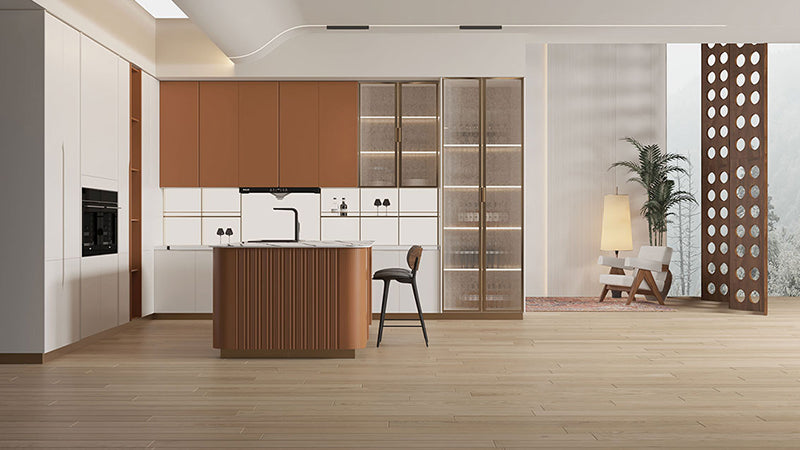
Kitchen islands have become a defining feature of modern homes. An island layout adds flexibility and social interaction.
- Additional storage and workspace
- Supports open-plan living
- Creates a visual centerpiece
Island layouts work best when paired with well-planned perimeter cabinets.
Galley Kitchen Cabinet Layout
The galley layout uses two parallel cabinet runs. It is often found in apartments and professional-style kitchens.
- Highly efficient use of space
- Short movement distances between zones
- Ideal for narrow rooms
With proper lighting and finishes, galley kitchens can feel both functional and modern.
How Custom Kitchen Cabinets Improve Layout Flexibility
Standard cabinet sizes do not always fit every space. Custom kitchen cabinets allow layouts to adapt to:
- Irregular room shapes
- Structural columns or beams
- Unique storage requirements
Customization ensures every layout works efficiently without wasted space.
Choosing the Right Layout for Different Project Types
Private Homes
Homeowners prioritize comfort, personalization, and long-term usability. Layouts are chosen based on lifestyle and cooking habits.
Real Estate Developments
Developers favor layouts that balance standardization with broad market appeal. L-shaped and island layouts are particularly popular.
Rental & Compact Housing
Simple layouts such as single-wall and galley kitchens maximize efficiency and cost control.

GoldenHome’s Approach to Kitchen Cabinet Layout Design
As a global whole-house customization brand, goldenhome designs kitchen cabinets systems around layout efficiency and real-life usage.
- Layout planning adapted to different markets
- Flexible cabinet systems for varied spaces
- Scalable solutions for residential and project supply
This approach ensures kitchen cabinets design that works across homes and large developments.
Conclusion: Layout Is the Key to a Successful Kitchen
Among all kitchen cabinets design decisions, layout has the greatest impact on daily use. It defines how the kitchen feels, functions, and flows.
By choosing the right kitchen cabinet layout ideas and combining them with modern kitchen cabinet design or custom kitchen cabinets, both homeowners and project partners can achieve efficient, comfortable, and lasting kitchen spaces.