Kitchen Cabinet Layout for Families: Planning a Multi-User Kitchen Without Congestion
Why Family Kitchens Need a Different Layout Approach
A family kitchen is rarely used by just one person. In households with children or frequent guests, the kitchen cabinet layout must support multiple users without causing congestion or conflict.
Layouts designed for single cooks often fail in family settings, where parallel tasks happen at the same time—prepping, cooking, cleaning, and grabbing snacks.

Understanding Multi-User Kitchen Behavior
Before planning cabinets, it’s important to understand how family kitchens are actually used.
- Two or more people cooking simultaneously
- Children accessing snacks or utensils
- One person cleaning while another prepares food
A successful family kitchen layout anticipates overlap rather than trying to prevent it.
Separating Work Zones to Reduce Conflict
In multi-user kitchen design, separating zones helps reduce traffic jams.
- Primary cooking zone: Focused around cooktop and main prep area
- Secondary prep zone: Additional counter and drawer access
- Independent snack zone: Allows children or guests to help themselves
These zones allow multiple activities to happen without interference.
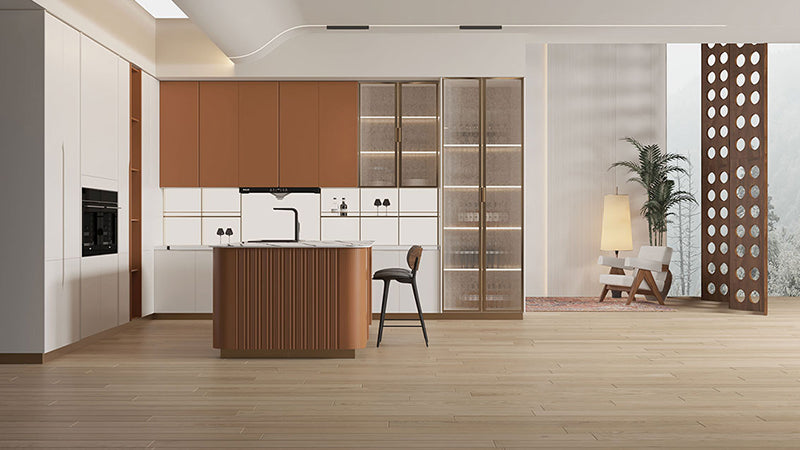
Island Layouts in Family Kitchens
Kitchen islands often become the anchor of family layouts.
- Serve as shared prep space
- Provide seating for casual meals or homework
- Act as a buffer between cooking and living areas
For families, islands work best when they include storage on both sides and maintain generous aisle clearances.
Cabinet Layout Strategies for Children
Family kitchens benefit from thoughtful accessibility planning.
- Lower drawers for snacks and lunch items
- Durable drawer hardware for frequent use
- Clear separation between child-accessible and adult-only storage
This reduces interruptions during cooking and encourages independence.
Pantry and Bulk Storage in Family Kitchens
Family households naturally accumulate more supplies. A well-planned pantry zone prevents clutter from spreading into prep areas.
- Tall cabinets for bulk groceries
- Pull-out pantry systems for visibility
- Dedicated space for lunch boxes and appliances
Efficient pantry layouts support long-term storage growth.
Designing for Growth and Change
Family needs change over time. A good kitchen cabinet layout allows flexibility without full renovation.
- Adjustable shelves
- Modular drawer systems
- Space reserved for future appliances
Planning for change reduces costly updates later.

Custom Cabinet Layouts for Family Use
Family kitchens often benefit from cabinet systems that allow layout customization beyond standard modules.
Some manufacturers, such as Goldenhome, approach kitchen cabinet layout planning with family use in mind—coordinating storage zones, drawer configurations, and circulation early in the design process. The advantage lies in adaptability and long-term comfort, not visual complexity.
Conclusion: Family Kitchens Thrive on Thoughtful Layouts
A family-friendly kitchen cabinet layout prioritizes movement, accessibility, and flexibility. When layouts support multiple users, the kitchen becomes a shared space rather than a source of daily friction.
By planning zones, storage, and circulation around real family behavior, kitchens remain functional and comfortable through every stage of home life.