Chinese Kitchen Design vs Western Kitchen Design: Understanding the Key Differences
As global kitchen design becomes more diverse, many homeowners, designers, and developers are comparing chinese kitchen design with traditional Western kitchen layouts. While both styles aim to support daily cooking, they are shaped by very different cultural habits, lifestyles, and design priorities.
Understanding these differences helps explain why modern Chinese kitchens are gaining recognition beyond their original cultural context.

Cultural Foundations Shape Kitchen Design
The most fundamental difference between chinese kitchen design and Western kitchen design lies in how kitchens are used on a daily basis.
Chinese kitchens are traditionally designed for:
- Frequent, high-heat cooking
- Multiple dishes prepared simultaneously
- Strong emphasis on cleanliness and organization
Western kitchens, by contrast, often emphasize:
- Occasional cooking and light meal preparation
- Social interaction within the kitchen
- Visual openness and display
These cultural differences directly influence layout, materials, and equipment choices.
Layout Philosophy: Separation vs Integration
Traditional chinese style kitchen layouts favor separation. Kitchens are often enclosed or semi-enclosed to manage heat, smoke, and cooking intensity.
Western kitchen design typically favors open layouts that connect the kitchen with dining and living areas.
- Chinese kitchens prioritize functional zoning
- Western kitchens prioritize social openness
Modern homes increasingly blend these approaches, creating hybrid solutions.
Workflow and Functionality
Chinese kitchen design is highly workflow-driven. The kitchen is organized to support efficiency and repetition.
- Dedicated zones for washing, cutting, cooking, and storage
- Compact and efficient work triangles
- Strong focus on ergonomics for daily use
Western kitchens often place greater emphasis on central islands and visual symmetry, sometimes at the expense of strict workflow efficiency.
Ventilation and Cleanliness
Ventilation is a defining feature of Chinese kitchens. Due to frequent stir-frying and high-heat cooking, effective ventilation is essential.
- Powerful range hoods
- Layouts designed to contain smoke and grease
- Easy-to-clean surfaces
Western kitchens typically require less intensive ventilation and may prioritize aesthetics over containment.
Storage and Organization Differences
Chinese kitchen design places strong emphasis on storage efficiency. A wide variety of ingredients, cookware, and tools must be stored and accessed easily.
- Vertical storage solutions
- Deep drawers and categorized compartments
- Cabinet systems designed for frequent access
Western kitchens may allocate more space to display items and fewer compartments for intensive storage.
The Rise of the Modern Chinese Kitchen
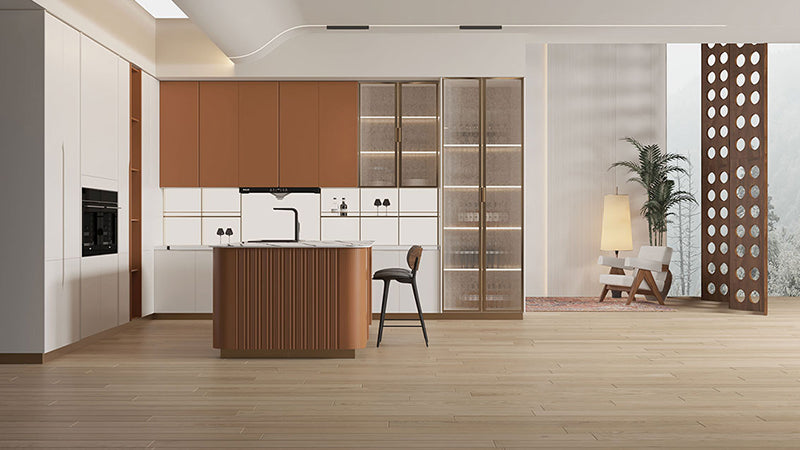
The modern chinese kitchen represents a convergence of Eastern functionality and Western openness.
Modern adaptations often include:
- Open or semi-open layouts with strong ventilation
- Cleaner cabinet lines and minimalist aesthetics
- Integrated storage that supports both cooking and living
This evolution makes Chinese kitchen design more accessible to international users.

Customization as the Key to Hybrid Kitchens
Custom chinese kitchen solutions allow designers to merge Chinese and Western design strengths.
- Layouts tailored to cooking habits
- Cabinet systems adapted to space constraints
- Material choices balancing durability and aesthetics
Customization ensures that kitchens meet real usage needs rather than following rigid style definitions.
Which Design Is Better for Modern Homes?
There is no single “better” design—only designs better suited to specific lifestyles.
- Chinese kitchen design excels in functionality and efficiency
- Western kitchen design excels in social integration
Modern homes increasingly combine both approaches to create kitchens that are practical, open, and comfortable.
Goldenhome and Integrated Kitchen Design Solutions
As a global custom home solutions provider, goldenhome supports kitchen designs that integrate the strengths of both Chinese and Western approaches.
By offering flexible cabinetry systems and layout customization, goldenhome enables kitchens that balance intensive cooking needs with modern living expectations.
Conclusion: Two Traditions, One Modern Direction
The comparison between chinese kitchen design and Western kitchen design highlights how culture shapes functionality.
As lifestyles evolve, the modern Chinese kitchen demonstrates how efficiency, cleanliness, and thoughtful layout can coexist with openness and contemporary aesthetics—creating kitchens that work for today’s global households.