Modern Kitchen Materials and Finishes: How the Right Surfaces Define the Space
Why Materials Matter More Than Color in Modern Kitchens
In a modern kitchen, materials do more than provide visual appeal—they define how the space feels and performs over time. While color trends come and go, material choices influence durability, maintenance, and long-term relevance.
Modern kitchens rely on restraint and consistency, which makes thoughtful material selection essential.

Core Material Principles in Modern Kitchen Design
Modern kitchen materials are chosen based on clarity, performance, and longevity rather than decoration.
- Visual calm: Low-pattern, low-gloss surfaces reduce visual noise
- Material honesty: Finishes reflect what they are, not what they imitate
- Durability: Surfaces are designed for daily use, not display only
These principles ensure the kitchen ages gracefully.
Modern Kitchen Cabinet Materials
Cabinetry forms the largest visual surface in most kitchens, making material choice critical.
- Matte lacquer: Clean appearance, soft light reflection, easy to maintain
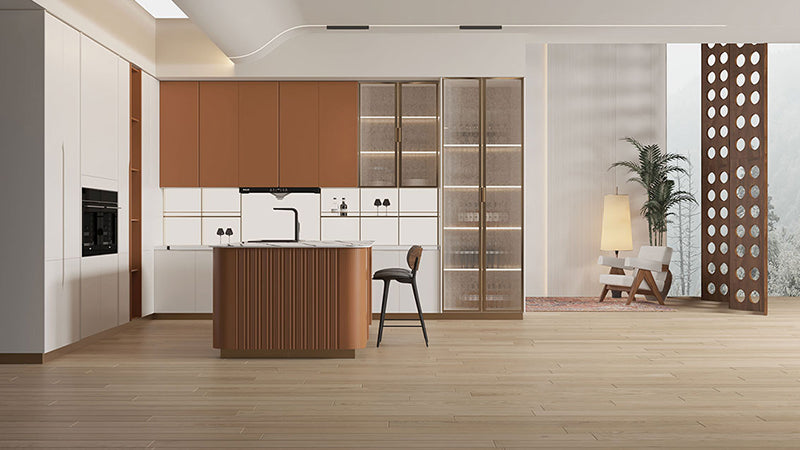
- Wood veneer: Adds warmth while maintaining flat, modern profiles
- Laminate: Highly durable, consistent finish, suitable for minimalist designs
- Textured panels: Subtle tactile interest without visual clutter
Flat-panel cabinet doors combined with these materials reinforce modern simplicity.
Countertop Materials in Modern Kitchens
Countertops in modern kitchens prioritize performance and visual restraint.
- Quartz: Consistent appearance, high durability, low maintenance
- Natural stone: Used selectively for subtle variation and depth
- Solid surface: Seamless joints for a clean, continuous look
- Concrete-inspired surfaces: Industrial character with modern refinement
Bold veining is typically minimized to preserve visual balance.
Modern Kitchen Finishes: Matte Over Gloss
Finish selection strongly influences the modern aesthetic.
- Matte finishes: Reduce glare and fingerprints
- Satin finishes: Balance softness with durability
- High-gloss finishes: Used sparingly, often as accents
Modern kitchens favor finishes that feel calm under different lighting conditions.
Metal Accents and Hardware
In modern kitchens, metal elements are subtle and purposeful.
- Integrated handles or handleless systems
- Brushed stainless steel or black finishes
- Minimal, consistent hardware language
Hardware should support usability without becoming decorative.

Backsplash Materials in Modern Kitchens
Backsplashes in modern kitchens often blend into the background.
- Full-height slabs matching countertops
- Large-format tiles with minimal grout lines
- Monochrome surfaces that extend visual continuity
This approach keeps attention on form and proportion rather than pattern.
Balancing Warmth and Minimalism
A common concern with modern kitchens is that they may feel cold.
This is often resolved through:
- Natural wood accents
- Textured matte finishes
- Balanced lighting temperatures
Modern kitchens are calm—not sterile—when materials are thoughtfully layered.
Material Coordination in Custom Modern Kitchens
Modern kitchens benefit from coordinated material planning across cabinets, countertops, and panels. Custom or semi-custom systems help maintain alignment and consistency.
Some manufacturers, such as Goldenhome, support modern kitchen projects by offering coordinated material palettes—allowing designers to balance warmth, durability, and simplicity without visual overload. The focus remains on coherence rather than variety.
Conclusion: Materials Shape the Modern Kitchen Experience
A well-designed modern kitchen relies on materials that support both function and visual clarity. By choosing finishes that are durable, understated, and consistent, modern kitchens remain relevant long after trends fade.
When materials are selected with intention, the kitchen becomes a space that feels effortless, balanced, and quietly refined.